Choose an FPGA by application.

Before reading specification tables, start from the nature of your project. That is the shortest route to the right FPGA and module.

Choose by product type

SoMs, carrier boards, SBC/BOX equipment and IP cores - choose by seeing what each one is and does.

SoM(System-on-Module)
1 Core

SoM (System-on-Module)

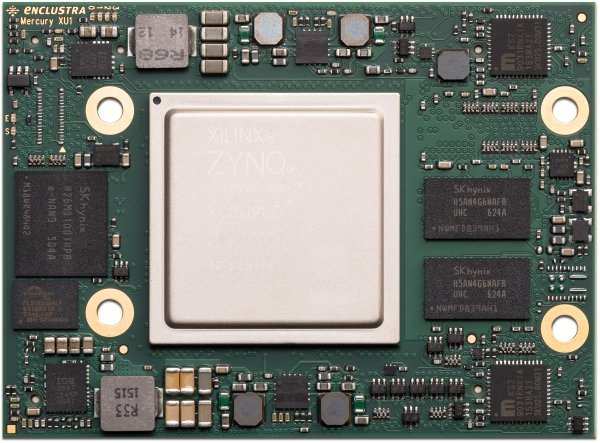
The heart of the system: FPGA, CPU, memory and power on one board, from business-card size to SO-DIMM. It does not run on its own - it mounts on a carrier board.

29 Products
Carrier boards
2 Foundation

Carrier boards

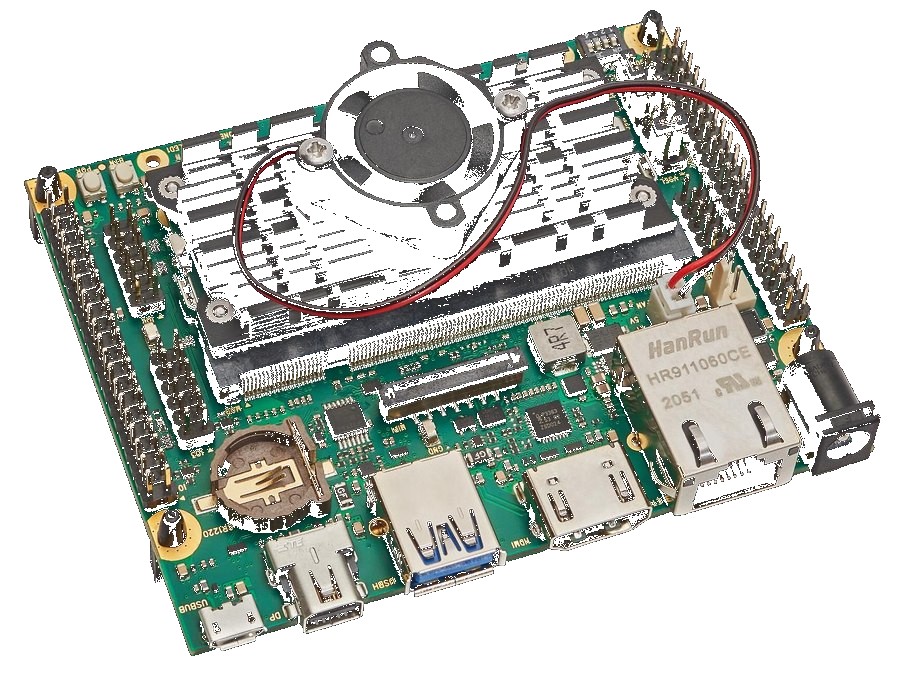
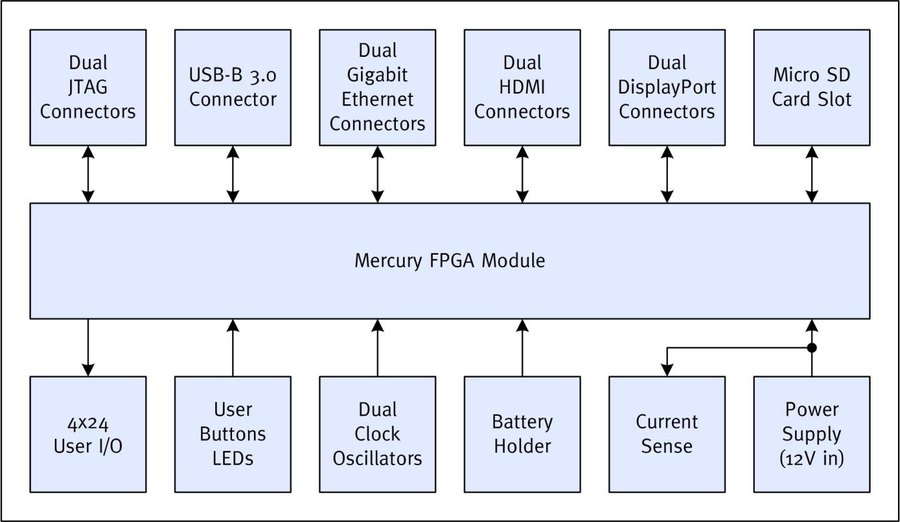
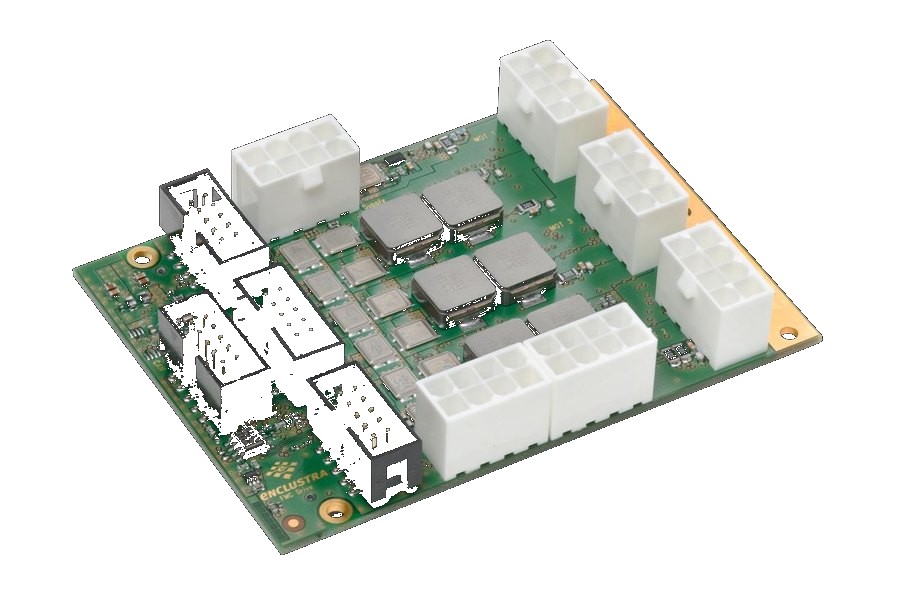
The board a SoM mounts on, bringing power, connectors and I/O out to the outside world. Using an off-the-shelf board (ST1, CA1, SA1, AA1, PE1 or EB1) lets you start evaluating without designing a board.

12 Products
SoM plus carrier board
1+2

SoM plus carrier board

A SoM mounted on a carrier board - this is what development and evaluation actually look like. It is also available as a Design-in Kit with cables, power supply and documentation.

SoM 29 x board 12
SBC / BOX (ready-built equipment)
3 Finished

SBC / BOX (ready-built equipment)

A finished unit in which the SoM and board are integrated inside an enclosure - network switches and industrial computers you can build straight into equipment.

7 Products
4 Contents

IP cores (networking)

The circuit design programmed into the FPGA. High-reliability networking such as HSR/PRP, TSN, PTP and MACsec is implemented in the SoM’s FPGA. It is supplied under licence, not as hardware.

17 Products
FPGA modules (no CPU)
Complementary

FPGA modules (no CPU)

Pure FPGA modules with no ARM processor. They suit designs that need only logic, high-speed serial and DSP, with the CPU provided separately, and use the same form factors as the System-on-Modules.

3 Products
FMC expansion and development tools
Support

FMC expansion and development tools

Function expansion through FMC mezzanine cards, evaluation kits and Design-in Kits. No hardware investment needed - start verifying on the day it arrives.

3 Products

SoMs - choosing by series

The 29 SoMs fall into seven series. Narrow them down by size and by the FPGA fitted.

Mercury

Standard and compact
56-64×54mm4 products

A standard series slightly smaller than Mercury+, centred on Zynq-7000 and Cyclone V.

Mars

SO-DIMM
67.6×30mm3 products

The industry-standard SO-DIMM form factor. Socket mounting makes it easy to design into volume production.

Pluto

Ultra-compact
Ultra-compact1 products

The smallest class of SoM, for equipment with severe space constraints.

Brick

Special form factors
Compact / SO-DIMM3 products

SMARTzynq, SMARTmpsoc and MEZU - compact, board-format products for specific applications.

Lynx

Edge AI
SoM1 products

Built on the SiMa.ai Modalix MLSoC, dedicated to machine-learning inference.

Carrier boards - types and roles

The 12 boards fall into four groups: evaluation platforms, complete kits, and function expansion.

Base boards (for evaluation and development)

4 items

The foundation you mount a SoM on. This is where evaluation starts.

Design-in Kit (complete set)

4 items

SoM, board, cables, power supply and documentation. You can start verifying on the day it arrives.

FMC expansion cards

3 items

Mezzanine cards that add functions such as ADC/DAC, motor control, RF and multi-port Ethernet.

Ruggedised and special form factors

1 items

Ruggedised solutions for aerospace and defence.

IP cores - by function

The 16 IP cores divide by function: redundancy, TSN, time synchronisation, security and general purpose.

Redundancy (zero interruption)

3 items

HSR/PRP loses no packets - essential technology for substations and industrial networks.

TSN (deterministic networking)

3 items

A time-sensitive network where bounded latency and determinism can be engineered under appropriate bandwidth design and scheduling. Central to IT/OT convergence.

Time synchronisation (PTP)

3 items

Nanosecond-class timing, for instrumentation, protection relays and time servers.

Security and power

2 items

Encryption and measurement IP for substation automation (IEC 61850/62351).

General-purpose functions and space

5 items

Function-specific IP such as DSP, motor control, UDP/IP and SpaceWire.

Key IP cores - specification comparison

Choose an FPGA by application. Key IP cores - specification comparison
IP coresFunctionPort speedSynchronisationRedundancy and main functions
Redundancy: HSR/PRP
HPSHSR/PRP redundant switch10M/100M/1GSLTC (P2P)Multiple HSR and PRP modes, QuadBox support and cut-through forwarding
MRSHSR/PRP plus legacy ports10M/100M/1GSLTC (P2P)HSR, PRP, DLR, MRP, STP, RSTP and 802.1X
MESManaged Ethernet switch10M/100M/1G802.1AS / 1588v2DLR, MRP, VLAN, STP and 802.1X
TSN deterministic networking
TGESTSN managed switch10M/100M/1G/10G802.1AS / 1588v2Qav/Qbv/Qci/CB/Qbu/Qcc / STP / 802.1X
MTSNTSN managed switch10M/100M/1G802.1AS / 1588v2Qav/Qbv/Qci/CB/Qbu/Qcc / VLAN / 802.1X
ETSNTSN endpoint100M/1G/10G802.1AS / 1588v2Qav/Qbv/Qci/CB/Qcc / QoS / VLAN
Time synchronisation (PTP)
1588TinyNo CPU requiredPTP slave (hardware only)10M/100M/1GMulti-profile PTP Better than +/-1 usToD and PPS outputs, event timestamping and IRIG-B output
PTBPTP Ordinary Clock (master/slave)10M/100M/1GMulti-profile PTP Better than +/-100 nsToD, PPS and selectable-frequency pulses, plus alarm detection
MultiSyncRedundant time synchronisation and gatewaysMulti-profile PTP and IRIG-BSimultaneous PTP and IRIG-B synchronisation, with bridging between them
Space: SpaceWire
SpaceWireSpaceWire node / routerUp to 200 MbpsECSS-E-ST-50-12C compliant, with an AXI4-Lite management interface

Figures from the official SoC-e datasheet (SocTek IP Cores). All the IP cores support AMD/Xilinx and Microchip FPGAs. You can try them with a time-limited evaluation version or an evaluation kit (SMARTmpsoc or SMARTzynq Brick).

Choose by application

Pick the nature of your project and the recommended FPGA and modules follow.

Industrial networking
Factory networks that never stop
ZU3EGZU6EG
5G base stations and SDR
RF connected straight to the FPGA
ZU28DRZU48DR
Medical devices
Ten-year supply and high reliability
7Z045ZU5EV
Automotive and rail
Keeps running in harsh environments
ZU4EG7Z030
Power infrastructure
Precise time and zero-loss redundancy
ZU3EG7Z020
Defence and space
Non-volatile FPGA and low power
PolarFireZU9EG
Video processing and AI
4K video and edge inference
ZU7EVVersal

Choose by capacity

Zynq UltraScale+ MPSoC - bar length shows logic capacity.

ZU2EG
103,320 LC
DSP 240
No GT transceivers
ZU3EG
154,350 LC
DSP 360
No GT transceivers
ZU4EG
192,150 LC
DSP 728
4× GTH (12.5Gb/s)
ZU5EG
256,200 LC
DSP 1,248
4× GTH (12.5Gb/s)
ZU6EG
469,446 LC
DSP 1,973
16× GTH (12.5Gb/s)
ZU7EG
504,000 LC
DSP 1,728
24× GTH (12.5Gb/s)
ZU9EG
599,550 LC
DSP 2,520
24× GTH (12.5Gb/s)
ZU11EG
653,100 LC
DSP 2,928
32× GTH/GTY (32.75Gb/s)
ZU15EG
746,550 LC
DSP 3,528
32× GTH/GTY
ZU17EG
926,194 LC
DSP 1,590
48× GTH/GTY
ZU19EG
1,143,450 LC
DSP 1,968
48× GTH/GTY

Figures are from the official AMD datasheet DS891. EV devices include a video codec; CG devices have no GPU.

If you cannot decide

Tell us your requirements and we will propose the right combination, from FPGA part number through SoM, carrier board and networking IP. We can also arrange evaluation hardware.